Emergency Management

Emergency preparedness checklist

The County of Haliburton has a plan of action to respond to an emergency and will make our resources available to protect the health, safety, welfare and property of the people in an emergency area.

We aim to:

  • Protect the health, safety, welfare, environment and economic health of the residents, businesses and visitors of the County of Haliburton when faced with an emergency.
  • Enable a centralized, controlled and coordinated response to emergencies in the County of Haliburton.
  • Meet the legislated requirements of the Emergency Management and Civil Protection Act, R.S.O. 1990 Chapter E.9 as amended.

If there is an emergency, public notifications will be provided through the local radio, corporate website, and social media accounts.

Municipal Emergency Response Plan:

Every official, municipal department, and agency must be prepared to carry out assigned responsibilities in an emergency. The emergency response plan has been prepared to provide key officials, agencies, and departments of the County of Haliburton with important emergency response information related to:

  • Arrangements, services and equipment; and
  • Roles and responsibilities during an emergency.

If you wish to view this plan please contact the County of Haliburton CEMC.

Community Emergency Management Coordinator (CEMC)

The County of Haliburton's CEMC develops and implements emergency response plans that include supporting plans for high risks like:

  • severe weather
  • transportation accidents
  • and more

The CEMC also maintains the Emergency Response Plan to align with the provincial regulations and is on-call 24 hours a day, 7 days a week, 365 days a year to respond to emergencies in the County.

You can connect with the County of Haliburton's CEMC by email or call 705-457-1616.

Be prepared!

The best emergency response is emergency preparedness. Everyone should be prepared in case of an emergency. There are resources you can use to get started.

Know the Risks

Get familiar with the potential risks in your area. In Haliburton County, this would commonly include flooding and winter storms. We should also be prepared for potential tornadoes and forest fires. The government of Ontario has a complete list of potential risks and how to be prepared.

Are you Prepared?

You can do your part by making sure you and those you care about are ready for an emergency. This is any situation that could result in harm to individuals or substantial damage to property caused by forces of nature, a disease or other health risk, an accident, or any act that is intentional or not.

Here's some helpful information to get you ready:

Make a plan that is specific to you and your family. Your plan should include:

  • Contact numbers of people close by and out of town;
  • Evacuation plan with two safe meeting locations and an evacuation route;
  • Emergency Numbers – keep these posted in a secure place and make sure everyone can access them;
  • Health info (medications) and special needs of family members;
  • Places for your pet to stay;
  • Safety features – everyone should know where the fire extinguishers are; adults should know how to turn off utilities if needed;
  • Know where to get accurate, official information in advance of an emergency happening;
  • Important documents – keep copies of your documents such as drivers license, passport, birth certificate in a safe place.

You can create your own family plan online.

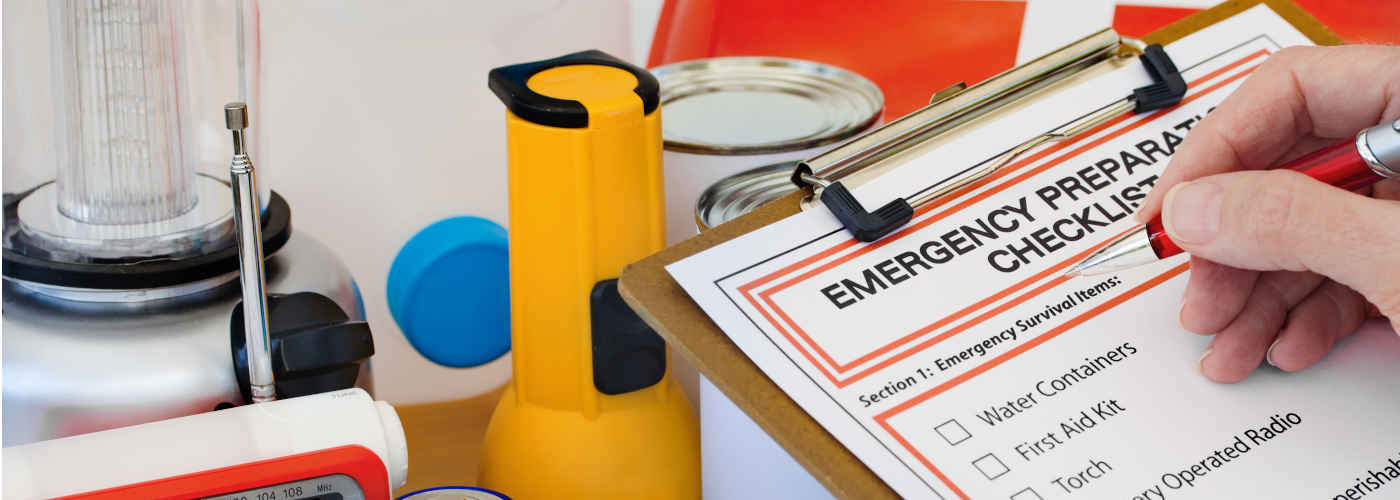
In an emergency you will need some basic supplies. You may need to get by without power or tap water. Be prepared to be self-sufficient for at least 72 hours. Make sure everyone knows how to find it. Check expiry dates of food and batteries twice a year. You should include:

  • Water — two litres of water per person per day (include small bottles)
  • Food that won't spoil, such as canned food, energy bars and dried foods (replace once a year)
  • Manual can opener or multi-tool
  • Wind-up or battery-powered flashlight (and extra batteries)
  • Wind-up or battery-powered radio (and extra batteries)
  • First aid kit
  • Extra keys for your car and house
  • Cash, in small bills and change
  • Toiletries such as toothpaste, toothbrushes, hand sanitizer and soap
  • Important family documents such as identification, insurance and bank records
  • Emergency plan — include a copy in your kit as well as contact information

How to build a 72 hour emergency kit

For the County of Haliburton, our risk assessment identifies these as the top eleven hazards for our community:

1. Snowstorm/Blizzard

2. Infectious Disease

3. Tornado/Windstorm

4. Communication System Failure

5. Wildland Fire

6. Extreme Cold

7. Flood

8. Cyber Attack

9. Freezing Rain

10. Convergence

11. Transportation Incident

Wildland Fires

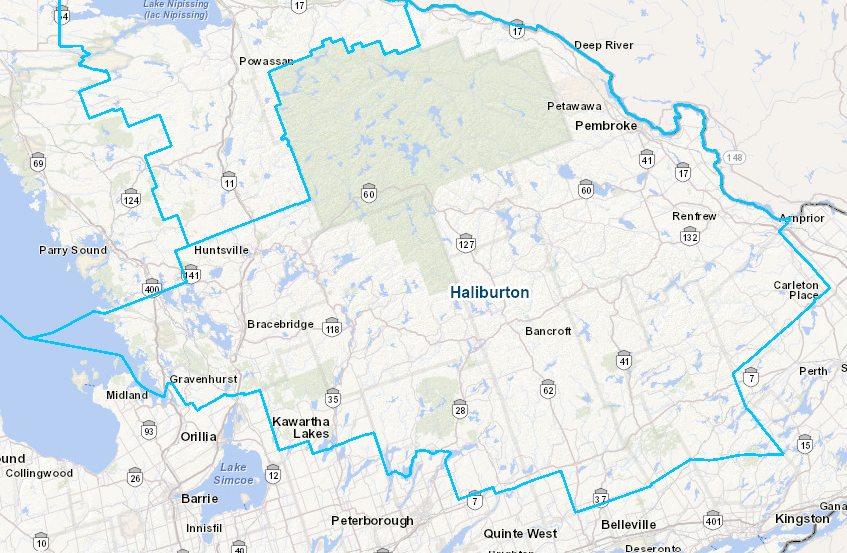
Haliburton County is located within the Ministry of Natural Resources Haliburton Fire Management Area. Please note that the Haliburton Fire Management Area extends beyond Haliburton County borders. Fires identified by the prefixes Haliburton and HAL are not necessarily active fires within Haliburton County.

The Ministry of Natural Resources Haliburton Fire Management region map shows Haliburton County within the region, which extends outside of Haliburton County as well.

For more information about active forest fires in Ontario, please visit the Ministry of Natural Resources Ontario Forest Fire Info Map. For social media updates, please visit Ontario Forest Fires.

CPR and First Aid training teaches you what method to use in different emergencies. The right technique and equipment can make all the difference once you've recognized the emergency.

Automatic External Defibrillators (AEDs) can be a useful tool when administering CPR and many public facilities in the County of Haliburton are equipped with them. The County of Haliburton has Public Access Defibrillators (PADS) in more than 38 sites all over the County, including areas such as community centres, arenas, curling clubs, and all branches of the Royal Canadian Legion.

The AED locations can be viewed from the County of Haliburton's interactive WebGIS.

A PDF version of AED locations throughout the County is also available.

More information is available about Public Access Defibrillation in Haliburton County here.

Many private facilities throughout the community have also installed AEDs in their facilities.

These are some great places to get more information on emergency preparedness:

211 Ontario (Public services and information)

Alert Ready (Emergency Alert System)

Emergency Management Ontario (Publications)

Emergency Preparedness Guide for People with Disabilities

Haliburton Highlands Resource Card

Haliburton, Kawartha, Pine Ridge District Health Unit

Health Canada

Ontario Emergency Preparedness